At a Glance:
- Explosive power declines faster than strength — training is the only way to keep it.
- Plyometrics improve reaction time, coordination, and movement quality for everyday people.
- Agility training teaches your body to decelerate safely, which is where most injuries actually happen.
- Fast-twitch muscle fibers disappear without training — maintaining athleticism as you age starts now.
- Village Clubs offers guided plyometric and agility programming for all fitness levels.
When most people think about plyometric and agility training, they picture professional athletes in a sports performance facility. But these qualities matter just as much for the person chasing after their kids, stepping off a curb, or catching themselves before a fall. Whether you compete or not, how your body produces and controls force directly affects your health, safety, and quality of life.
As a former collegiate football and track athlete turned coach, I have spent years learning that the gap between athletic training and everyday fitness is far smaller than people think. The research backs it up.
Why Is Plyometric and Agility Training Important for People Who Are Not Athletes?
Explosive power is one of the first physical qualities to decline with age. Muscle mass starts declining around age 30 at a rate of 3 to 5 percent per decade without active training, but power declines even faster than strength. By your 60s, overall physical capacity can drop by 30 to 40 percent from its peak if you are not training.
Agility is not just about dodging defenders. It is about your body knowing how to decelerate, stabilize, and redirect movement safely. Most non-contact injuries happen during uncontrolled deceleration, not acceleration. If your body has never learned to absorb force when changing direction, your risk of ankle, knee, and hamstring injuries increases significantly.
You do not need to compete in sports to benefit from training like one.
What Are Plyometrics?
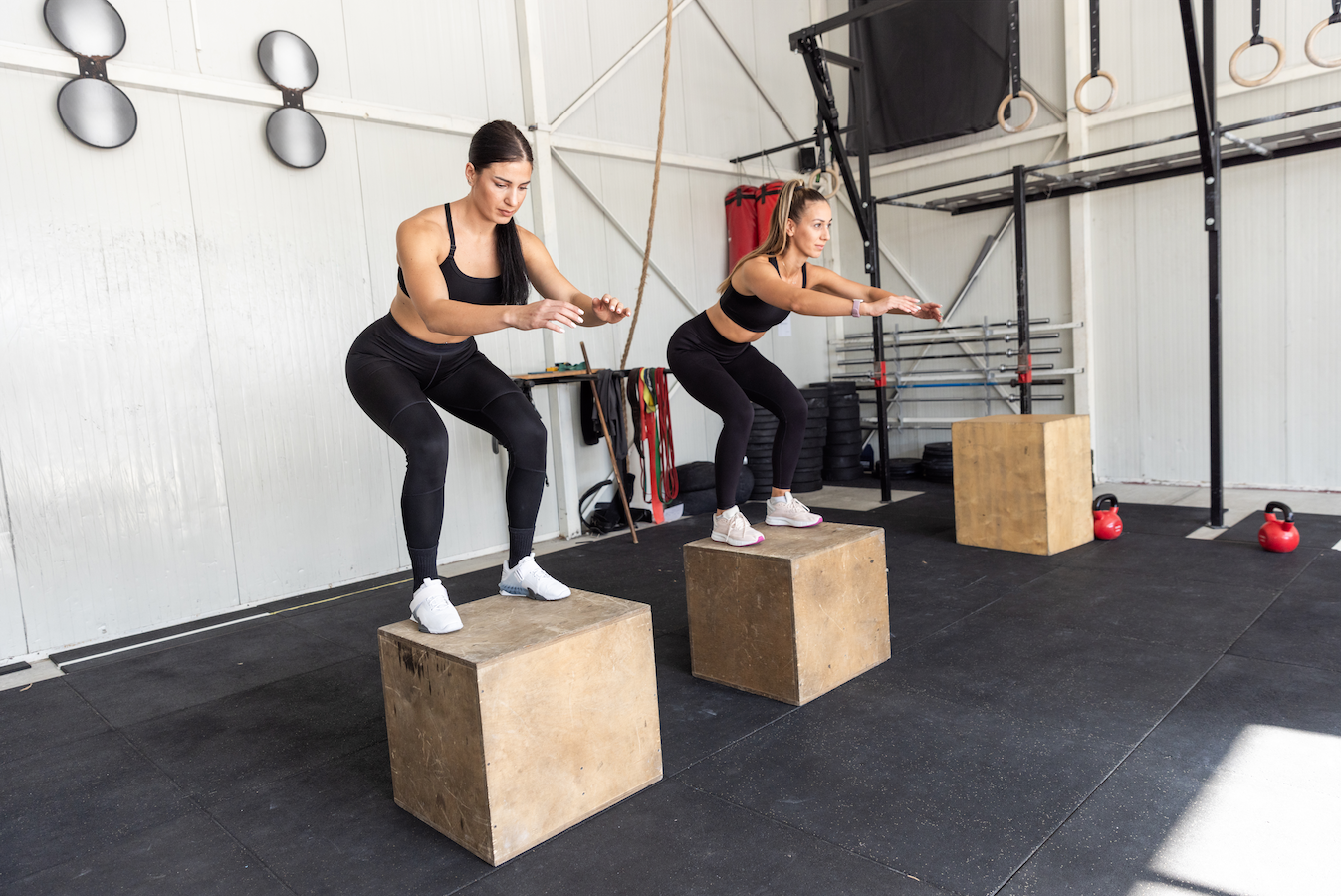
Plyometrics are exercises that train your body to produce force rapidly. Traditional strength training builds the capacity to generate force. Plyometrics teach you to apply that force quickly. That speed of contraction is the difference between strength and power.
Examples
- Box Jumps
- Broad Jumps
- Medicine Ball Throws
- Depth Drops
- Explosive Push-Ups
Plyometrics vs Strength Training
Strength training builds your engine. Plyometrics teach it to rev quickly. For athletes, that means sprinting faster and jumping higher. For everyday people, it means quicker reaction times, better coordination, and improved movement quality. You need both.
What Is Agility Training?
Agility training is the ability to decelerate, re-accelerate, and change direction efficiently. True agility is multi-directional — not just moving fast in a straight line.
Examples
- Lateral Shuffles
- Cone Drills
- Acceleration and Deceleration Drills
- Reaction-Based Movement
- Sprinting in Multiple Directions
Most non-contact injuries happen during uncontrolled deceleration. When a person cannot absorb force or stabilize their joints while changing direction, the risk of ankle sprains, knee injuries, and hamstring strains increases dramatically. Agility training teaches the body to brake, control momentum, and redirect movement safely.
3 Key Benefits for Everyday Life
1. It Improves Real-World Performance
Strength built in the weight room will not fully translate to real-world movement without explosive power training. Climbing stairs, pivoting quickly, or catching yourself mid-stumble all require fast, coordinated force that plyometrics and agility drills specifically develop.
2. It Builds Injury Resilience
Progressive programming strengthens tendons, improves joint stability, and builds movement control. It develops safe landing mechanics, dynamic knee alignment, and ankle stability, the exact qualities that reduce injury risk in sport and in daily life.
3. It Helps You Maintain Athleticism as You Age
Fast-twitch muscle fibers decline faster than any other physical quality without targeted training. If your routine only includes slow, controlled movements, you may keep base strength, but you will lose explosiveness. Plyometric and agility training are among the most effective fall-prevention exercises for aging adults because they improve reaction time, coordination, and body awareness.
How Village Clubs Can Help
At Village Clubs, our certified coaches design progressive plyometric and agility programs tailored to your fitness level — whether you are just getting started or looking to sharpen performance. We focus on proper movement mechanics, appropriate progressions, and building physical resilience that carries over into everything you do.
From small group training to one-on-one coaching, our team meets you where you are.
You do not need to compete in sports to train like an athlete. Plyometrics build power. Agility builds control. Together, they maintain speed, coordination, and injury resilience throughout life. The ability to move confidently, react quickly, and trust your body is a lifelong asset available to anyone who invests in it.
If you are ready to build fitness that carries over into real life, Village Clubs is here to help. Our coaches will meet you where you are, build a plan that fits your goals, and guide you every step of the way.
Sign up for a 7-day free trial at any of our clubs – Gainey, Ocotillo, DC Ranch, or Camelback
Frequently Asked Questions
Q: Is plyometric training safe for beginners?
Yes, when introduced with proper progressions. Beginner plyometrics start with low-impact movements that build landing mechanics and joint stability before advancing to higher-intensity work. A qualified coach ensures you develop the foundational strength and technique needed to train safely.
Q: How does agility training help prevent injuries?
Agility training conditions your body to decelerate and change direction in a controlled way. The majority of non-contact injuries occur during uncontrolled deceleration. By training your body to absorb and redirect force efficiently, you significantly reduce the risk of ankle, knee, and hamstring injuries.
Q: Can older adults benefit from plyometric and agility training?
Absolutely. It is one of the most valuable fall-prevention exercises for older adults. As we age, fast-twitch muscle fibers and explosive power decline faster than general strength. Training these qualities improves reaction time, balance, and body awareness — all critical for preventing falls and maintaining independence. Programs are always scaled to the individual.
Q: How is plyometric training different from strength training or cardio?
Strength training builds force capacity. Cardio builds endurance. Plyometrics trains your neuromuscular system to produce force at speed. All three are valuable, but plyometrics uniquely develop the explosive power and fast-twitch fiber recruitment that the other two cannot fully replicate.